
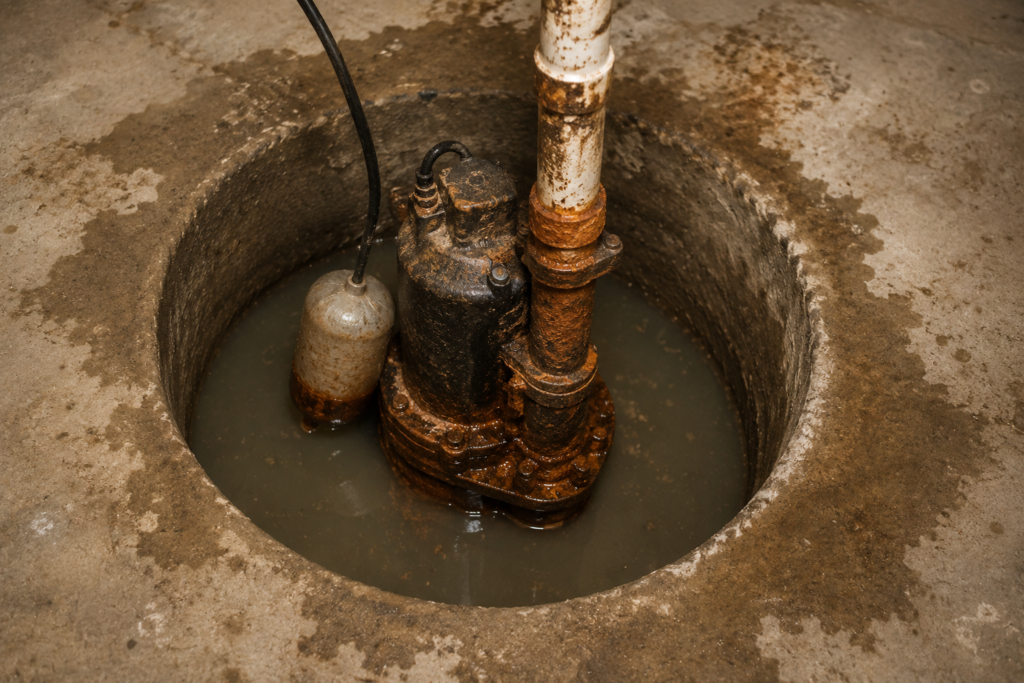
For Spokane homeowners with a basement or crawl space, a sump pump is the single most important line of defense against water intrusion. It works silently in the background – activating automatically whenever groundwater or snowmelt begins accumulating around your foundation – and most homeowners never think about it until the day it stops working.
That day can be catastrophic. A failed sump pump during a Spokane rainstorm or spring snowmelt event can allow several inches of water to accumulate in your basement within hours. And unlike a slow roof leak or a dripping pipe, basement flooding from a sump pump failure hits fast – leaving little time to react before serious structural damage begins.
This guide covers everything Spokane homeowners need to know about sump pump failure: the warning signs, what to do when it happens, and – critically – why the water damage a failed pump causes requires professional restoration, not just a replacement pump and a mop.
Why Sump Pumps Are Essential in Spokane
Spokane’s geography and climate create conditions where basement water intrusion is a real and recurring risk for many homeowners:
- Spring snowmelt: Spokane receives significant snowfall throughout winter. When temperatures rise in spring, large volumes of meltwater saturate the ground rapidly – raising the water table around residential foundations and creating intense pressure on basement walls and floors.
- Heavy rainfall events: Spokane experiences periods of heavy rain – particularly in fall and early winter – that overwhelm soil drainage capacity and push groundwater toward home foundations.
- Clay-heavy soils: Many Spokane neighborhoods sit on soils with high clay content that drain poorly. Rather than absorbing rainwater quickly, clay soils hold it near the surface and push it toward the lowest point – your basement.
- Older home foundations: A significant portion of Spokane’s housing stock was built decades ago, with foundation waterproofing systems that have degraded significantly over time and rely heavily on a functioning sump pump to compensate.
A properly installed, well-maintained sump pump manages all of these risks automatically. When it fails, every one of these factors works against your home simultaneously.
7 Warning Signs Your Sump Pump Is About to Fail
Catching sump pump problems early can be the difference between a simple repair and a flooded basement. Watch for these signs:
- Strange noises during operation: Grinding, rattling, or gurgling sounds indicate a damaged impeller, a worn motor bearing, or debris caught in the pump mechanism. Any unusual noise warrants immediate inspection.
- The pump runs continuously: A properly functioning sump pump cycles on and off as the water level in the pit rises and falls. A pump that runs non-stop suggests a stuck float switch, a pump undersized for your water volume, or a broken check valve allowing water to flow back into the pit.
- The pump won’t activate at all: This is the most dangerous scenario – your home has no flood protection. Causes include a tripped circuit breaker, a failed float switch, a burned-out motor, or a disconnected power supply.
- Visible rust or corrosion: Surface rust on the pump body or discharge pipe indicates aging and deterioration. Internal corrosion may already be affecting the pump’s performance and reliability.
- Water in the pit but pump not activating: If the water level in the sump pit is clearly elevated but the pump isn’t turning on, the float switch has likely failed and the pump will not respond to rising water.
- Musty odor from the basement: A persistent damp or musty smell – even without visible water – often means moisture is seeping in around your foundation and the pump is struggling to keep up.
- The pump is over 7 years old: The average lifespan of a residential sump pump is 7 to 10 years. An aging pump approaching or past this range should be tested and replaced proactively – especially before Spokane’s wet season begins.
What to Do Immediately When Your Sump Pump Fails
Speed of response directly determines how much damage occurs. Follow these steps the moment you suspect pump failure:
- Step 1 – Check the power supply first: Before assuming the pump has failed mechanically, verify that it’s plugged in, the outlet is working, and the circuit breaker hasn’t tripped. A surprising number of pump failures are simply power issues.
- Step 2 – Inspect the float switch: The float switch activates the pump when water reaches a set level. Manually lift the float to see if the pump activates. If it doesn’t respond, the pump or switch needs replacement.
- Step 3 – Check the discharge pipe: Make sure the pipe that carries water away from your home isn’t frozen, blocked, or disconnected. A blocked discharge pipe prevents the pump from doing its job even when it’s running.
- Step 4 – Remove standing water temporarily: If water is already entering the basement, use a wet-dry vacuum to remove as much as possible while you wait for professional help. Every gallon removed is less damage to your floors and walls.
- Step 5 – Move valuables to higher ground: Electronics, furniture, documents, and anything stored at floor level should be moved immediately – water damage to belongings compounds quickly.
- Step 6 – Call a sump pump professional AND a water damage restoration team: Visit sump pump installation Spokane to get your pump assessed and replaced. Then call a water damage restoration team — because the water already in your basement needs professional attention that goes far beyond what a new pump provides.
The Water Is In – Now What?
This is where most Spokane homeowners make a costly mistake. They get the sump pump replaced, run a shop vac over the floor, set up a few fans, and consider the problem solved. But basement flooding – even a few inches of standing water – causes damage that surface drying cannot address:
- Subfloor saturation: Water wicks rapidly into wooden subfloors, causing swelling, warping, and eventual rot that is invisible from above until the floor becomes soft or unstable.
- Wall cavity moisture: Water along basement walls travels into wall framing, soaking insulation and wooden studs from the bottom up – creating hidden moisture pockets that persist for weeks.
- Concrete absorption: Basement concrete floors and walls are porous and absorb significant amounts of water during a flooding event, releasing it slowly as humidity that sustains mold growth.
- HVAC and utility equipment damage: Water heaters, furnaces, electrical panels, and ductwork located in the basement are all at risk when flooding occurs – and damage to these systems is often not immediately obvious.
According to the U.S. Environmental Protection Agency (EPA), mold begins growing on wet building materials within 24 to 48 hours of water exposure. In a basement environment – where air circulation is limited and humidity naturally runs high — that window closes even faster than in above-grade living spaces.
What Professional Water Damage Restoration Involves After Basement Flooding
A certified water damage restoration company brings equipment and expertise that no DIY approach can replicate:
- Thermal imaging and moisture mapping: Technicians use infrared cameras and professional moisture meters to identify every area of hidden dampness – inside walls, under flooring, and within structural cavities — that is invisible to the naked eye.
- Industrial water extraction: Truck-mounted extraction units remove water from concrete floors, carpeting, and subfloors far more effectively than consumer wet-dry vacuums.
- Structural drying with commercial equipment: High-capacity air movers and dehumidifiers are placed strategically throughout the affected area and monitored daily with moisture readings until all structural materials return to safe dryness levels.
- Antimicrobial treatment: All affected surfaces are treated to stop mold and bacterial growth before the space is closed up and restored.
- Complete documentation: Professional restoration companies provide detailed damage reports and work directly with your insurance company to support your claim.
The team at Spokane WA Water Damage responds 24 hours a day across Spokane, provides complete moisture mapping after basement flooding events, and handles the full restoration process – from initial water extraction through final repairs and mold prevention treatment.
Choosing the Right Sump Pump for Your Spokane Home
Not all sump pumps are equal – and choosing the right system for your specific home and water volume is critical for long-term protection:
- Submersible vs. pedestal pumps: Submersible pumps sit inside the pit and handle higher water volumes more quietly. Pedestal pumps sit above the pit and are easier to service but less powerful for high-demand situations.
- Horsepower rating: Homes in high water table areas or with large basement footprints need higher horsepower pumps. An undersized pump runs continuously and burns out prematurely.
- Battery backup systems: A battery backup sump pump is essential in Spokane – power outages frequently coincide with the same storms that cause the most flooding. Without a backup, your primary pump is useless exactly when you need it most.
- Water alarm systems: A simple water alarm placed in the sump pit provides early warning of rising water levels before flooding occurs – giving you time to respond before damage begins.
For professional advice on the right sump pump system for your Spokane home.
Final Thoughts
A sump pump failure in Spokane is one of those emergencies that arrives without warning and demands immediate action on two fronts: replacing the pump to restore your flood protection, and addressing the water damage the failure already caused inside your home.
The pump replacement is the straightforward part. The water damage restoration – finding hidden moisture, drying structural materials, preventing mold, and repairing what was damaged – is where most homeowners underestimate what’s needed.
Leave a Reply