
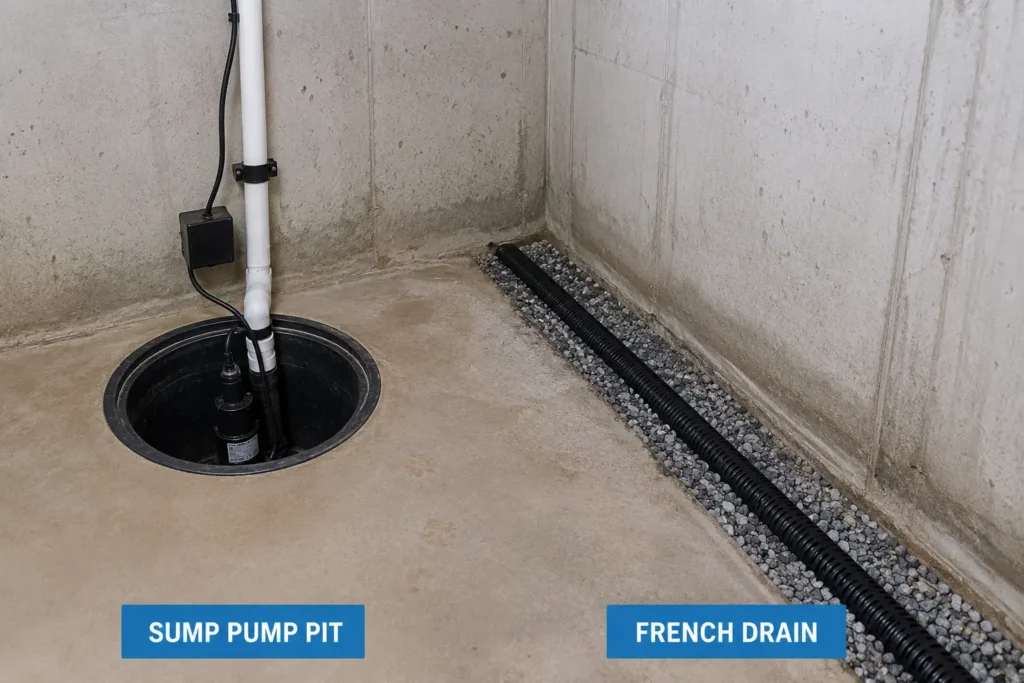
If you’ve researched sump pump vs French drain options even once, you’ve probably come across this exact debate. Both systems get recommended constantly, both claim to solve the same problem, and most homeowners end up picking one without really understanding what each one is doing differently underground.
This comparison breaks down how each system actually works, where each one performs better, and why in many homes, the real answer isn’t choosing one over the other.
How a Sump Pump Actually Works
A sump pump sits in a pit, usually dug at the lowest point of your basement floor, and collects groundwater that seeps in through the foundation. Once water reaches a certain level, a float switch triggers the pump, which pushes the water out and away from your home through a discharge pipe.
The key thing to understand is that a sump pump is reactive. It doesn’t stop water from entering, it removes water after it has already collected. This makes it effective, but only as effective as the pump itself, the backup power source, and how often it’s maintained.
In Spokane, where spring snowmelt and heavy rain create sudden surges in groundwater, a sump pump is often the only thing standing between a dry basement and a flooded one.
How a French Drain Works Differently
A French drain takes a completely different approach. Instead of collecting water after it enters your basement, it’s installed around the perimeter of your foundation, either inside or outside, and redirects groundwater away before it ever reaches your walls.
The system is essentially a gravel filled trench with a perforated pipe running through it, sloped to carry water toward a drainage point, often connecting into the same sump pit a sump pump would use.
This makes a French drain proactive rather than reactive. It reduces the amount of water pressure building against your foundation in the first place, which is exactly what causes cracks, seepage, and eventually structural damage over time.
The Real Cause Behind Most Basement Flooding – Hydrostatic Pressure
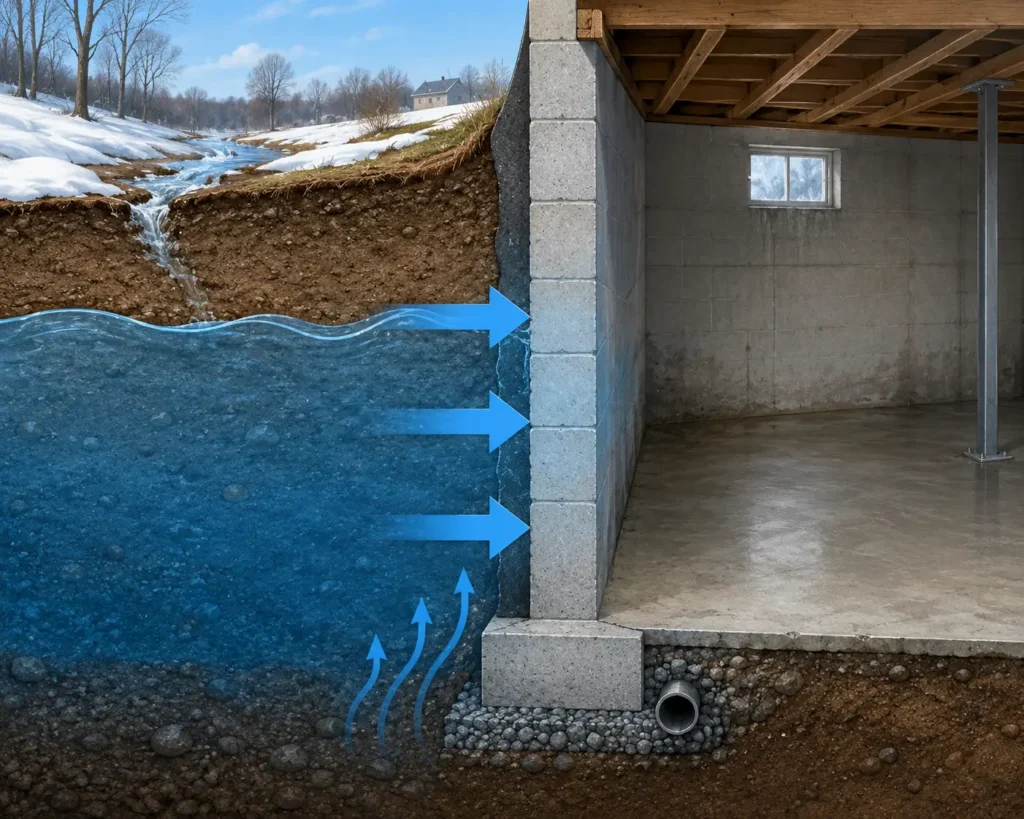
Both systems exist because of one underlying problem, hydrostatic pressure. When the water table around your home rises, usually during spring snowmelt or after heavy rainfall, groundwater pushes against your foundation walls and floor.
Concrete is porous, so given enough pressure and time, water finds its way in, whether through hairline cracks, the cove joint where your wall meets the floor, or directly through the slab. This is the mechanism behind sump pump water damage Peoria homeowners deal with every spring, when the Illinois River drives groundwater levels up across the region.
Understanding this pressure dynamic is the key to choosing the right system, because a sump pump alone manages water after the pressure has already pushed it inside, while a French drain reduces the pressure itself before it becomes a problem.
Where Each System Performs Best
Neither system is universally better, the right choice depends on your home’s specific situation.
A sump pump alone tends to work well when:
- Your home has a working interior drainage system already in place
- Water intrusion is occasional rather than constant
- Budget is a primary concern, since sump pump installation costs significantly less upfront
- The home doesn’t have chronic foundation seepage issues
A French drain becomes necessary when:
- Your basement experiences recurring seepage through walls, not just floor level flooding
- The property sits on a slope or in an area with consistently high water tables
- You’ve already had a sump pump fail or get overwhelmed during a major storm
- Foundation cracking has started appearing due to long term hydrostatic pressure
Why Most Properly Protected Basements Have Both
This is the part most homeowners don’t realize until they’ve already dealt with a flood. A sump pump and a French drain aren’t competing systems, they’re complementary ones.
The French drain intercepts groundwater before it builds pressure against your foundation and channels it toward the sump pit. The sump pump then removes that collected water and pumps it away from the home. Without the French drain, the sump pump is working harder than it needs to, constantly cycling to manage water that’s already pushed its way inside. Without the sump pump, the French drain has nowhere to send the water it’s collecting.
For homes in flood prone regions, this combination is what actually prevents the kind of sump pump water damage Peoria and similar Midwest cities see every spring, where sudden groundwater surges overwhelm a single system working alone.
What Happens When You Only Have One System
A sump pump installed without proper drainage support is essentially playing catch up during major water events. If the volume of incoming groundwater exceeds what the pump can cycle through, water backs up and floods the basement anyway, pump failure or not.
A French drain installed without a sump pump has the opposite problem. It successfully redirects water away from your foundation, but without a pump to actively remove that collected water during heavy events, the drain can become saturated and lose effectiveness exactly when you need it most.
This is why our sump pump replacement consultations in Spokane always start with an assessment of the existing drainage setup, not just the pump itself. A failing pump paired with no drainage support is a much bigger risk than most homeowners realize until water is already on the floor.
Signs Your Current System Isn’t Enough
A few warning signs indicate your existing setup, whether sump pump only or French drain only, isn’t providing complete protection:
- Water stains or efflorescence appearing on basement walls, even without visible flooding
- A sump pump that cycles constantly during rain events, rather than occasionally
- Musty odors that persist regardless of how dry the floor looks
- Cracks in the foundation wall that weren’t there during the last inspection
- Any flooding event at all, even minor, despite having a functioning pump
If you’re noticing any of these, it’s worth getting a sump pump repair and drainage evaluation done together, rather than assuming the pump alone is the issue.
The Backup Power Factor Nobody Talks About
Here’s something that gets overlooked constantly, a sump pump only works when it has power. During major storms, the exact moment you need your sump pump running at full capacity is often the same moment your power goes out.
This is where emergency sump pump services and battery backup systems become critical, not optional. According to FEMA flood preparedness guidance, homes in flood prone areas should never rely on a single point of failure system, and a sump pump without backup power is exactly that.
A French drain, since it relies on gravity rather than electricity, continues functioning during a power outage, which is one more reason the combination of both systems offers more reliable protection than either one alone.
Final Thought – It’s Not Really a Versus Question
The sump pump versus French drain debate makes it sound like you’re choosing between two competing options, but the reality is they solve different parts of the same problem. A sump pump removes water that’s already collected, a French drain reduces the pressure that pushes water in to begin with.
For homeowners dealing with recurring sump pump water damage Peoria and across the broader Midwest, and for Spokane residents managing Pacific Northwest spring runoff, the most reliable basement protection setup pairs both systems together rather than relying on one to do the other’s job.
If you’re trying to figure out which setup makes sense for your specific home, our team can walk through your foundation type, drainage history, and flooding patterns to recommend what actually fits. Call us at (480) 393-5426 to schedule an assessment, our team handles both sump pump and drainage evaluations across the Spokane area.
Leave a Reply