
Spokane’s water damage risk doesn’t come from hurricanes or tropical storms – it comes from what happens every spring when accumulated mountain and valley snowpack melts all at once. Combined with the region’s clay-heavy and rocky soil composition, rising groundwater during snowmelt season is one of the most common reasons Spokane homeowners end up with wet basements, and a properly installed sump pump is often the difference between a dry spring and a flooded crawl space.
Why Spokane’s Snowmelt Season Is a Unique Risk
Unlike rainfall-driven flooding in other parts of the country, Spokane’s spring flooding risk builds up over an entire winter. Snowpack accumulates in the surrounding hills and the Spokane Valley through the winter months, and when temperatures rise quickly in March and April, that snow can melt faster than the ground can absorb it. This creates a surge in groundwater levels that pushes moisture toward the path of least resistance, which is very often a home’s foundation and basement.
Homes in low-lying parts of the valley, and those built into hillsides in areas like the South Hill or near the Spokane River corridor, see this pattern most severely. Groundwater doesn’t need to reach the surface to cause damage; it only needs to rise high enough to put pressure against a basement wall or foundation footing, where it finds cracks, joints, or porous concrete to seep through. Our basement waterproofing team fields a sharp increase in calls every March and April, almost always tied to this exact seasonal pattern.
How Spokane’s Soil Makes This Worse
Much of the Spokane area sits on a mix of glacial till, rocky subsoil, and pockets of clay that don’t drain evenly. In areas with poor natural drainage, melted snow and spring rain can sit closer to the surface for longer, keeping pressure on foundations for weeks at a stretch rather than draining away quickly after a single storm. This is very different from regions with sandy or well-draining soil, where groundwater levels drop faster once precipitation stops.
Homes built before modern foundation waterproofing standards were common, particularly those from the 1960s through 1980s, are especially vulnerable. Many of these homes were built with minimal footing drain systems, and decades of soil settling and small foundation cracks have created more entry points for water than the original builders anticipated.
What a Sump Pump Actually Does
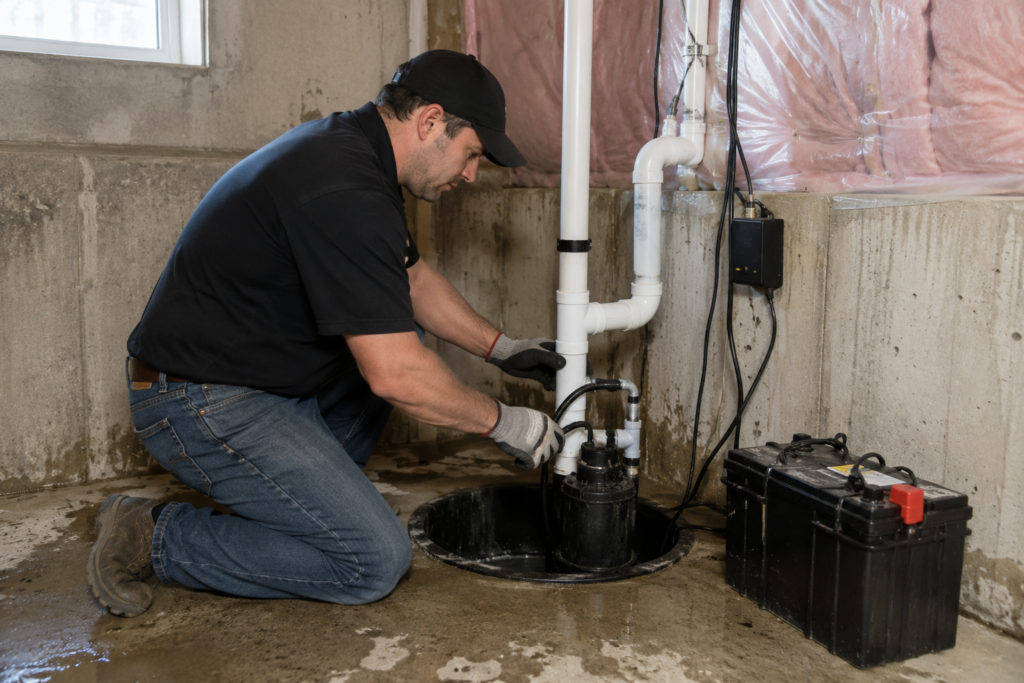
A sump pump sits in a basin, typically installed at the lowest point of a basement or crawl space, and its job is to intercept groundwater before it has a chance to spread across the floor. As water table levels rise during snowmelt season, water collects in the basin, and once it reaches a certain level, the pump automatically activates and moves that water away from the home through a discharge line, usually routed well away from the foundation.
Without a sump pump, that same rising groundwater has nowhere to go but up through the path of least resistance, which in an unprotected basement means seeping through the slab, up through floor drains, or through cracks in the foundation wall. By the time water is visibly pooling on a basement floor, the pressure behind that wall has often already been building for days.
Signs You May Need a Sump Pump
A musty smell in the basement that seems to intensify every spring is one of the most common early signs of a rising water table problem, even before any visible water appears. Efflorescence, the white, chalky mineral deposits that sometimes appear on basement walls, is another indicator, since it forms as moisture wicks through concrete and evaporates, leaving mineral residue behind.
Homes that have experienced even minor basement dampness during a previous spring thaw are strong candidates for a sump pump installation before the next season arrives, since groundwater patterns tend to repeat year over year unless something changes about the property’s drainage. Our spring flood prevention guide covers additional early warning signs worth checking for before snowmelt season begins.
Homes near known drainage-poor areas of the valley, or properties where neighbors have reported basement flooding in past years, should treat sump pump installation as a preventative measure rather than something to address only after damage has already occurred.
Sump Pump Installation Considerations for Spokane Homes
Battery backup systems are worth serious consideration in Spokane specifically, since spring storms that cause power outages often coincide with the exact conditions that put the most stress on a sump pump system. A pump that loses power during the highest-risk moment of the year provides no protection at all, which is why many Spokane homeowners choose to pair a primary pump with a battery-backed secondary system.
Discharge line placement matters more here than in flatter regions, since improperly routed discharge lines can end up redirecting water right back toward the foundation if they aren’t angled correctly given Spokane’s varied, often sloped terrain. A professional installation accounts for the specific grading of the property rather than using a one-size-fits-all approach.
Pump capacity should be matched to the home’s specific groundwater conditions rather than assuming a standard residential pump will handle every situation. Homes in higher-risk drainage areas may need a higher-capacity pump or even a dual-pump system to keep up with the volume of water moving through the basin during peak snowmelt.
What Happens If You Wait Too Long
Basements that flood repeatedly during snowmelt season without a sump pump in place often develop secondary problems beyond the immediate water damage. Persistent dampness creates ideal conditions for mold growth, and materials like drywall, carpet, and wood framing that are repeatedly exposed to moisture degrade faster with each cycle, even if the basement appears to dry out completely between events. Our crawl space and basement mold remediation team frequently sees cases where years of untreated seasonal dampness led to far more extensive damage than a single flooding event would have caused on its own.
Foundation health can also be affected over time, since repeated hydrostatic pressure against basement walls, especially in homes with existing minor cracks, can slowly worsen structural issues that started out as a minor concern.
Getting a Professional Assessment
Every property’s groundwater risk is different, shaped by soil composition, grading, proximity to the river, and the age and condition of the existing foundation. A professional assessment before installation ensures the pump size, basin placement, and discharge routing are matched to your specific property rather than a generic solution. Restoration and prevention teams across the region, including established names like water 911 damage, generally recommend addressing groundwater risk proactively rather than waiting for the first flooded basement to force the issue – a principle that holds true whether you’re dealing with Texas storm flooding or Pacific Northwest snowmelt.
If your Spokane home has experienced basement dampness during past spring thaws, or if you’re in an area known for drainage challenges, getting a sump pump installed before the next snowmelt season is one of the most effective preventative steps you can take. See our full range of sump pump installation and basement waterproofing services for assessment, installation, and maintenance options available throughout the Spokane area.
Leave a Reply